

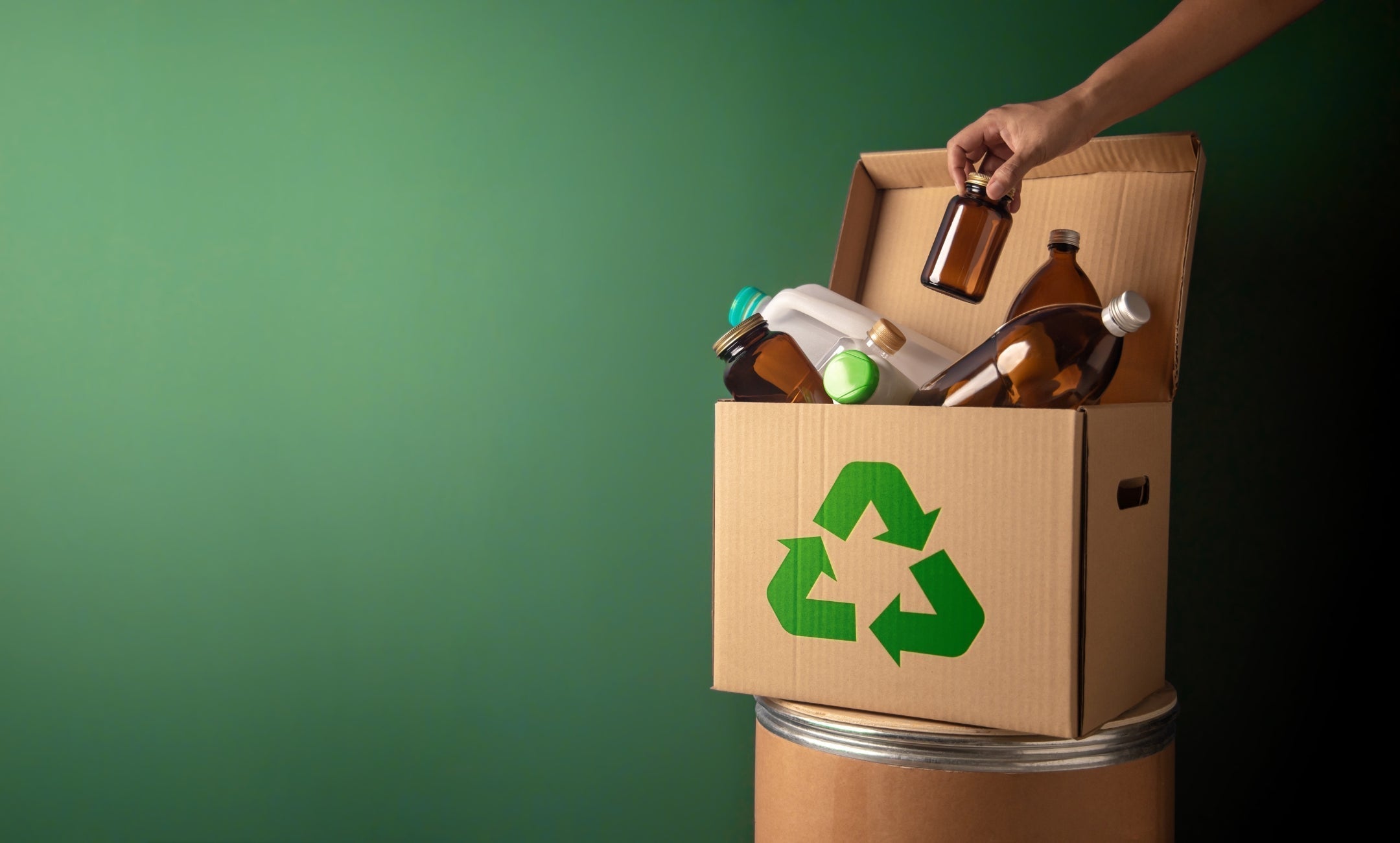
Communities around the world are turning waste into valuable resources, proving that local solutions can indeed have a global impact. Countries that invest in smart policies and encourage citizen participation manage to drastically reduce waste and improve quality of life.
There are several examples of countries that stand out for their progressive practices and policies, serving as inspiration for the rest of the world.
Here are some success stories:
Germany
Germany adopts an approach that seeks to minimize the amount of waste sent to landfills and maximize recycling, composting, and energy recovery.
Non-recyclable waste is burned at high temperatures, generating heat that is subsequently converted into electrical and thermal energy.
Citizens are encouraged to separate waste at the appropriate recycling points, and are even rewarded in some supermarkets. In the country, recyclable packaging is properly marked, there are five different bins on the streets to separate waste, and companies are held responsible for the recyclability of their packaging.
Thanks to these practices, Germany recycles about 70% of all waste produced. According to Eurostat data, in 2010 the country recycled more than half of its urban waste, while the European Union average was only 25%. This success is not due to producing less waste, but rather to the efficient way it is managed.
Switzerland
Switzerland is another excellent example of waste management, significantly minimizing the amount of waste sent to landfills.
The country invests in advanced recycling technologies, with modern facilities that transform waste into secondary raw materials for manufacturing new products.
In Zurich, there are about 12,000 recycling points, where approximately 50% of waste is recycled and the rest is used to produce energy. Recycling is mandatory, and non-compliance can result in fines.
Sweden
Sweden is a reference in sustainable approaches that minimize environmental impact and promote resource recovery.
The country follows a waste management hierarchy that prioritizes prevention, reuse, recycling, and energy recovery, in that order. Less than 1% of waste ends up in landfills.
Waste is carefully separated and citizens are strongly encouraged to participate, thanks to environmental education programs aimed at all ages.
Non-recyclable waste is incinerated in plants that convert combustion heat into thermal and electrical energy, used, for example, for heating homes through the national grid.
Austria
Austria is recognized for having one of the highest recycling rates in the world, with efficient selective collection systems for paper, plastic, glass, and organic waste, and for investing in modern infrastructure that enables quality recycling.
Organic waste is often composted or subjected to biodigestion, then used in agriculture as a natural fertilizer. About 70% of biological waste is turned into compost.
Since 2020, the country has also banned the use of plastic bags.
Non-recyclable waste is incinerated, generating thermal energy used for district heating and electricity.
Japan
Despite the high population density and lack of landfill space, Japan has stood out for its innovative waste management measures.
The country adopts a strict collection system, with multiple separation categories, each with a specific destination.
Recycling is strongly encouraged through education and public awareness, resulting in widespread citizen participation.
Japan has also invested in state-of-the-art incineration technologies and advanced emission control systems.
South Korea
South Korea is an example of efficient management of food and organic waste.
The government charges a fee per kilo of organic waste discarded, which incentivizes waste reduction.
Additionally, families pay a small monthly fee proportional to the amount of food waste they produce, encouraging more responsible behavior.
Singapore
Singapore has one of the lowest volumes of waste sent to landfills in the world, relying on only one landfill, mainly used for plastics.
Companies are fully responsible for the waste they produce and how they dispose of it, promoting more sustainable practices.
Netherlands
The Netherlands is an example of innovation in recycling, especially in the construction sector.
In 2018, parts of a bike path were built entirely with recycled plastic.
The country focuses on waste separation, the use of renewable energies, and the promotion of a circular economy, which integrates sustainability across all sectors.
Canada
Although Canada is not among the countries that recycle the most, it stands out for its circular economy, which encourages citizens to sell, donate, or reuse products.
The country is also a pioneer in tire recycling, reusing the material in road construction or park coatings, and promotes the collection of cigarette butts through specific containers in various cities.
Wales
Wales has implemented ambitious policies that include reducing disposable products, extended producer responsibility, developing plants capable of recycling non-recyclable products, and promoting the circular economy.
The goal is to achieve zero waste to incinerators or landfills by 2050.
These examples show that recycling and composting are not just environmental obligations, but opportunities for innovation, cooperation, and community development.
If we adopt similar practices, we can create cleaner, healthier, and more sustainable cities for future generations.
Image: siriwannapatphotos/Source
Share this article:
Children are the future: sustainability for the little ones
The growth of the refurbished market in Portugal and worldwide